
Bitcoin Cloud Mining
Music Tools ProFinance
4.288.00 Reviews
- Version
- 2.7
- Installs
- 10.00K
- Age Rating
- Everyone
Screenshots
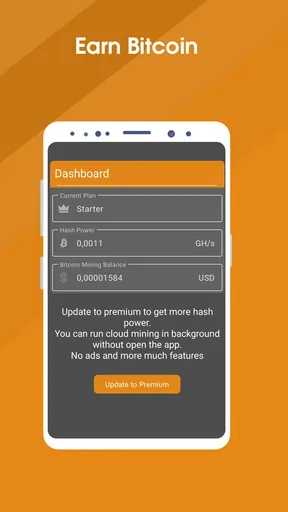
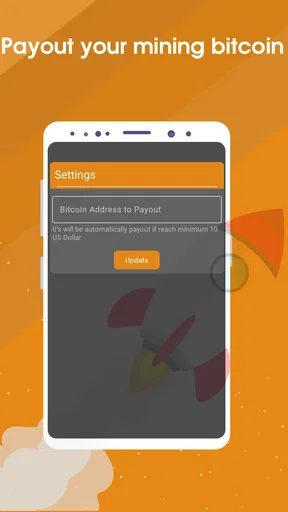
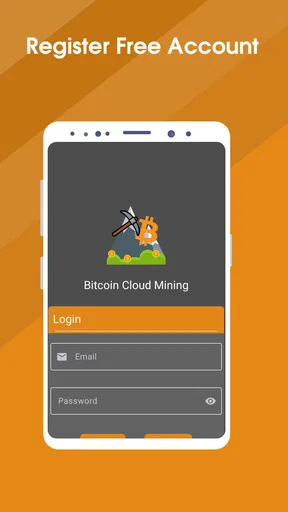
Our Review of Bitcoin Cloud Mining
 Analysis by Appyee
I approached Bitcoin Cloud Mining as a small finance app for people curious about earning Bitcoin through a cloud-mining model rather than running mining hardware themselves. Its central appeal is easy to understand: you install the app, review its available mining experience, and explore a digital way to participate without buying a computer built for cryptocurrency work. In practice, I found that the most important part is not tapping through the interface quickly, but understanding what the app can realistically offer and treating it as a learning tool rather than a guaranteed income source.
The app is free to install, carries an Everyone age rating, and comes from Music Tools Pro. It sits in a category where expectations need careful handling. Cloud mining sounds simple because the technical equipment is kept away from the user, but that does not remove the economic risks of Bitcoin, changing mining conditions, or paid upgrades. My overall impression is that this is best suited to curious beginners who want to explore the idea with limited commitment. It is less appropriate for someone looking for predictable returns, detailed market analysis, or the transparency of operating their own wallet and mining setup.
How I approached the everyday workflow
My first recommendation is to begin slowly. I would install the app, look through every main screen, and identify where the mining activity, account information, balance display, and any upgrade prompts are located before making decisions. That first inspection matters because finance apps can make a simple process feel more urgent than it really is. I prefer to understand the basic path from opening the app to checking progress before considering any optional purchase.
The most sensible baseline habit is a short check-in rather than constant monitoring. Open the app, review the current status, note whether the balance or activity has changed, and close it if there is nothing useful to do. Repeatedly refreshing a mining screen does not make the underlying process more profitable. It only encourages users to confuse visible activity with actual financial progress.
I also suggest keeping a simple personal record outside the app. Write down the date of each check, the displayed balance, and whether you changed any setting or activated a paid option. This is not glamorous, but it gives you a way to judge the experience over time instead of relying on memory. It also makes it easier to notice whether an upgrade has any practical value for your own use.
A realistic everyday scenario would be someone who wants to learn about Bitcoin during a spare moment on a commute. They could open the app, inspect the current mining status, read the available information, and leave without spending anything. Later, they could compare what changed with their notes. That workflow is healthier than treating the app like a slot machine and checking it every few minutes in the hope of a sudden result.
The free entry point is useful for this kind of trial. You can decide whether the interface makes sense and whether the routine fits your expectations before paying. However, “free” should be read as an opportunity to explore, not as evidence that earning Bitcoin will cost nothing in the broader sense. Your time has value, and any in-app purchase deserves the same scrutiny as a subscription or financial service fee.
Settings and purchase choices worth checking
Before selecting anything that appears to increase mining activity, I would read the wording carefully and look for the exact effect of the option. A button that sounds faster may change a displayed rate, unlock a feature, or simply present a different tier. Those are not interchangeable benefits. The useful question is: what will change in the way I use the app, and how will I know whether that change was worthwhile?
The available in-app purchases range from $4.99 to $35.99 per item. That spread is large enough that I would avoid choosing the most expensive option simply because it is presented as the strongest one. A beginner should first understand the free workflow, then decide whether a paid feature solves a specific problem. If the only motivation is impatience, waiting is usually the better financial decision.
There is another setting-related habit I consider important: separate learning from investing. If you use the app to understand terminology or observe how a cloud-mining interface works, keep that goal distinct from buying cryptocurrency elsewhere or committing money inside the app. Combining those decisions in one excited session makes it harder to judge whether you are experimenting or taking a financial position.
I would also review the app after updating it rather than assuming the layout and labels remain familiar. The current version is 2.7, and it supports devices running Android 7.0 or later. That broad compatibility is convenient for people with older phones, but older hardware can still affect how comfortable the interface feels. If screens load slowly or notifications become distracting, using the app less often is more sensible than trying to compensate with repeated taps.
One practical tip is to disable any attention-grabbing alerts that are not genuinely useful, if your device allows it. A finance app should support deliberate checking, not create a loop in which every notification feels like a reason to open it. I would keep only reminders that help with a planned review. This small change makes the experience calmer and reduces the chance of making a purchase impulsively.
Faster patterns without confusing speed with profit
Experienced use of this app is less about finding a secret shortcut and more about building a repeatable routine. I would use the same order every time: check the account or mining screen, inspect the displayed progress, review any new prompt, and record a note only when something changed. A fixed sequence reduces careless decisions and makes comparisons more meaningful.
Another efficient pattern is to group questions together. Instead of opening the app whenever one thought occurs, keep a short list: Has the balance changed? Did the mining status remain active? Did a new purchase prompt appear? Is the displayed information understandable? Answering those questions in one session prevents the app from taking more attention than it deserves.
For someone testing a paid option, I would change only one thing at a time. If you activate an upgrade and alter several other settings immediately, you will not know which change affected your experience. A one-change trial is slower at first but produces better information. It also protects against the common mistake of spending more simply because the first purchase did not deliver the expected feeling of progress.
Cloud mining has a particular psychological trap: the interface can make passive activity feel like a machine that is steadily producing wealth. I found it more useful to treat every displayed figure as information requiring context. A rising number inside an app is not automatically the same as money available to withdraw, nor does it prove that a purchase will pay for itself. Keeping that distinction in mind is one of the most valuable habits a user can develop.
If your goal is to learn Bitcoin basics, pair the app with independent reading about wallets, transaction fees, market volatility, and the difference between a balance display and a completed transfer. The app can be a starting point for curiosity, but it should not be your only source of understanding. For actual portfolio management, a reputable exchange or wallet with clear transaction records may be a better fit.
Where the advanced limits become important
The biggest limitation is the gap between the simplicity of the interface and the complexity of Bitcoin mining economics. Real mining involves hardware costs, electricity, network competition, changing rewards, and operational expenses. A cloud-mining app abstracts those details away, which makes it approachable but also makes it harder for a beginner to judge what is happening behind the screen.
That abstraction is acceptable for exploration, but it becomes a weakness when money is involved. Before paying for any item, I would want to understand what the purchase represents, how progress is measured, and what conditions apply to receiving anything of value. If the explanation feels vague, I would not proceed. A polished screen cannot replace clear financial terms.
I would also avoid using borrowed money, essential savings, or funds needed for bills. This advice is especially important because the app is presented as a way to mine Bitcoin and earn BTC, language that can easily sound more certain than the underlying outcome. Cryptocurrency values can move sharply, and a displayed mining result does not remove that market risk.
Users who need detailed technical control may find the app too limited compared with running mining software on dedicated equipment or using a service that publishes extensive operational information. Those alternatives bring their own costs and risks, but they may offer more detail for an experienced user. Conversely, someone who only wants to buy and hold Bitcoin may find a regulated exchange or a straightforward wallet less confusing than a mining-themed interface.
Privacy and account discipline also matter. I would use a unique password if the app requires an account, avoid sharing recovery details, and never send sensitive information through an informal support conversation. I would not assume that a finance label makes an app equivalent to a bank. Basic digital-security habits remain necessary, especially when cryptocurrency is involved.
The app has attracted an average rating of 4.2 from around 2.8 thousand ratings, with more than 80 written reviews, and it has passed 10 thousand installs. Those figures suggest that it has found an interested audience, but popularity should not be treated as proof of profitability or suitability. Reviews can help identify interface frustrations, yet each user still needs to evaluate the financial side independently.
Who will get the most from it
I can see value here for a beginner who wants a gentle introduction to the language and rhythm of cloud mining. The free installation lowers the barrier to trying the interface, while the Everyone rating makes it broadly accessible from an age-classification standpoint. It may also suit a person who enjoys tracking digital projects and is comfortable treating the experience as an experiment with strict spending limits.
It is less suitable for a user who expects a stable monthly return, needs professional-grade reporting, or wants complete control over mining hardware and transaction handling. I would also steer away from it if you are easily tempted by upgrade prompts or if you are unfamiliar with Bitcoin but already feel pressure to invest quickly. In that situation, a slower educational route is safer.
For families, the age rating does not remove the need for supervision around money. An Everyone label describes content suitability, not financial maturity. I would explain that free access and potential earnings are separate ideas, and I would not let a child make purchases or share account information without an adult handling the decision.
One of the app’s strengths is that it can make an intimidating subject feel approachable. One of its weaknesses is that approachability can encourage overconfidence. The same simplicity that helps a newcomer start can hide the questions an experienced cryptocurrency user would naturally ask. That trade-off defines the product more than any individual screen.
My final view after settling into a routine
After using the app with a measured workflow, I see Bitcoin Cloud Mining as a lightweight exploration tool rather than a dependable income solution. Music Tools Pro has created an accessible entry point for people interested in the idea of digital cloud mining, and the free starting experience makes it possible to judge the interface before spending. The app is easiest to appreciate when you use it occasionally, keep records, and resist turning every progress display into a financial promise.
The paid items require the most caution. With individual purchases reaching $35.99, I would not buy an upgrade until I could explain exactly what it changes and why that change matters to me. I would also compare the cost with alternatives: educational material if my goal is learning, a wallet if my goal is holding Bitcoin, or a recognized exchange if my goal is buying and selling. The best choice depends on that purpose, not on the excitement of a mining screen.
My practical verdict is simple: try it free if you are curious, establish a short review routine, and treat every paid decision as optional. Do not use it with money you cannot afford to lose, and do not confuse in-app progress with guaranteed earnings. For patient beginners, it can provide a convenient way to explore the cloud-mining concept. For serious miners, active traders, or anyone seeking predictable returns, a more transparent and specialized financial tool will likely be the better choice.
Verdict
Strengths of Bitcoin Cloud Mining
- No specialized mining hardware is required.
- Accessible from mobile devices with a simple interface.
- May offer several cloud-mining contract options.
- Reduces exposure to home electricity and cooling costs.
- Useful for learning basic concepts of cryptocurrency mining.
Limitations of Bitcoin Cloud Mining
- Mining returns can be reduced by platform fees.
- Contracts may become unprofitable when Bitcoin prices fall.
- Users depend entirely on the provider’s uptime and honesty.
- Withdrawals may require identity checks or minimum thresholds.
- Cloud-mining services carry a significant scam and fraud risk.
Similar Picks in This Category
View All
Google Wallet
Google LLC4.3

Airtel: Recharge, Bank & Loans
Airtel4.0

PayPal - Pay, Send, Save
PayPal Mobile4.2

DANA Indonesia Digital Wallet
PT Espay Debit Indonesia Koe4.5

Binance: Buy Bitcoin & Crypto
Binance Inc.4.8

Cash App
Block, Inc.4.7
Frequently Asked Questions
What is Bitcoin Cloud Mining?
Bitcoin Cloud Mining is a service that allows users to participate in Bitcoin mining without purchasing or operating physical mining hardware. Instead, you typically rent a portion of computing power from a remote data center through the app. The platform then manages the equipment, electricity, cooling, and maintenance, while any mining rewards are displayed in your account according to the provider’s terms.
Is Bitcoin Cloud Mining free to use?
Some Bitcoin Cloud Mining apps advertise free plans, trial contracts, or bonuses for new users, but these offers often provide limited computing power and may generate very small returns. Other features usually require a paid contract, subscription, or deposit. Before committing money, carefully review fees, contract duration, withdrawal conditions, minimum balances, and whether earnings are guaranteed or simply estimated.
Can I really earn Bitcoin with this app?
Bitcoin Cloud Mining may allow users to receive mining-related rewards, but profitability is never guaranteed. Results depend on the contract price, Bitcoin’s market value, network difficulty, electricity and maintenance charges, payout limits, and the provider’s reliability. In some cases, fees can be higher than the rewards generated. Treat projected earnings as estimates rather than promises.
Is Bitcoin Cloud Mining safe and legitimate?
Safety depends entirely on the specific provider behind the app. Before downloading or depositing funds, check the developer’s identity, company information, privacy policy, user reviews, support channels, and withdrawal history. Be cautious of guaranteed profits, urgent deposit requests, referral-heavy systems, anonymous operators, and requests for unnecessary personal or wallet information. Never assume an app is legitimate solely because it appears in an official store.
What should I check before downloading or investing?
Review the app’s permissions, reputation, supported countries, payment methods, withdrawal rules, and terms for cloud-mining contracts. Confirm whether you control your Bitcoin wallet and understand all network, service, maintenance, and withdrawal fees. Also check how customer support handles disputes and whether the app clearly explains its mining operation. Only use money you can afford to lose, and avoid sharing private keys, recovery phrases, or sensitive account credentials.
